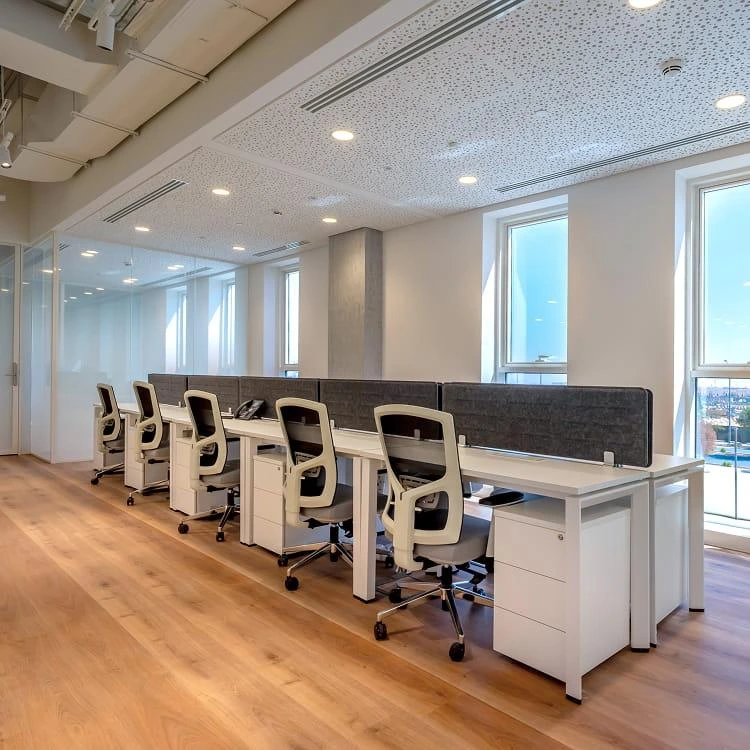
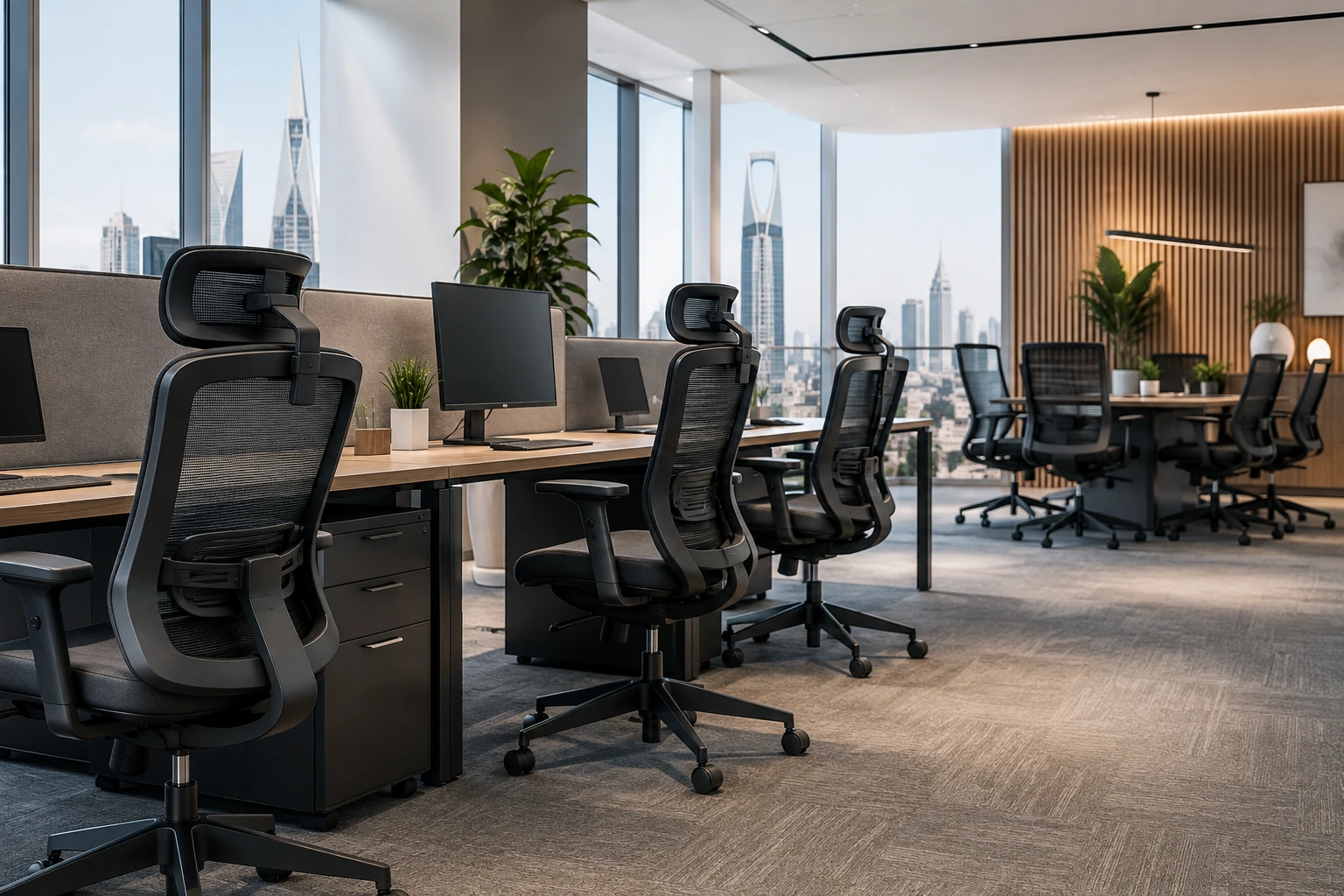
Office chairs in Riyadh are often selected after the desks, layout, and interiors are already decided, yet the wrong chair can affect how the entire workspace functions every day. A chair that is too large can restrict movement, a poorly fitted seat can make long desk work uncomfortable, and an unsuitable material can create unnecessary maintenance issues. Take a closer look at how office chair design can influence comfort, space, productivity, and purchasing decisions in Riyadh.
Why Office Chair Design Matters in a Riyadh Workspace
An office chair is not an isolated piece of furniture. It works as part of a larger system involving the employee, desk height, monitor position, available floor space, and the number of hours spent sitting. A chair may look premium but still perform poorly if its seat depth is unsuitable, its armrests prevent the user from reaching the desk, or its base occupies too much workspace.
The Occupational Safety and Health Administration, OSHA, recommends selecting and adjusting office chairs in Riyadh as part of the complete workstation rather than evaluating seating alone. A suitable chair should support the back, legs, arms, and seated posture while allowing the user to work comfortably at the desk. This is particularly important in Riyadh offices where one workspace may include employees with different body sizes and work patterns.
How the Right Chair Design Can Make Better Use of Office Space
The right office chair design can help a Riyadh workspace feel more organised, open, and easier to use without increasing the size of the office. Compact proportions, smooth mobility, and well planned dimensions allow employees to move comfortably around desks while keeping workstations visually neat. The right chair can also support flexible layouts, making the same space easier to adapt for individual work, shared desks, or multipurpose use.
- Creates a more open workspace: Slimmer chair profiles and balanced proportions can reduce visual clutter and make compact offices feel less crowded.
- Improves movement between workstations: Smooth casters and a practical chair base allow employees to move, turn, and access nearby areas more easily.
- Keeps desks and walkways organised: Chairs that slide neatly under desks can free up circulation space when workstations are not in use.
- Supports efficient open plan layouts: Consistent chair dimensions can help create cleaner workstation rows and better use of shared floor space.
- Makes small offices feel more functional: Compact designs can provide proper seating without allowing one large chair to dominate the room.
- Adds flexibility to home offices: Well sized chairs can support work comfortably while fitting into rooms used for other daily activities.
- Helps adapt multipurpose spaces: Lightweight or easily movable chairs allow spaces to change quickly between desk work, meetings, and collaborative activities.
Office Chair Design Features That Improve Everyday Comfort
The right office chair features can make long working hours feel more comfortable and help employees adjust their seating to suit their body and desk setup. Instead of focusing on the number of controls, look for features that improve support, allow easier movement, and help users maintain a comfortable position throughout the day.
Lumbar Support for Long Sitting Hours
Well positioned lumbar support helps the lower back feel supported during extended desk work. Adjustable lumbar support can improve comfort for employees of different heights, allowing each user to position the support where it feels most natural and comfortable.
Adjustable Seat Height and Depth
Seat height and depth adjustments help employees create a more comfortable sitting position for their body and workstation. Proper adjustment can improve foot support, provide better thigh contact, and allow users to sit comfortably against the backrest.
Armrests That Support Comfortable Desk Work
Properly positioned armrests can help employees rest their forearms while typing, using a mouse, or performing other desk tasks. Adjustable armrests allow users to bring the chair closer to the desk and find a position that feels comfortable.
Recline and Tilt for Movement
Recline and tilt features give employees the freedom to change their sitting position instead of remaining in one posture for hours. This can make long working periods feel less restrictive and provide more comfortable moments of movement and relaxation.
Headrests for Extended Sitting
A headrest can provide additional comfort when employees lean back or take short breaks at their workstation. For high back office chairs, adjustable headrests can support the neck and upper body while reclining between tasks.
Office Chairs in Riyadh for Different Workspaces
Corporate offices: Prioritise adjustable seating, durable mechanisms, breathable materials, and dimensions that work consistently across multiple workstations.
Executive offices: High back designs and premium upholstery can create visual presence, but comfort should still depend on seat fit, lumbar positioning, and desk compatibility rather than appearance alone.
Home offices: Choose compact chairs that fit the room and can serve multiple purposes. A large executive chair may feel out of proportion in a smaller residential workspace.
Meeting and conference rooms: Prioritise comfortable entry and exit, suitable chair spacing, and dimensions that do not overcrowd the table. Highly adjustable task chairs may not be necessary for short meetings.
Shared workstations: Select chairs with intuitive adjustments that employees can use quickly. A complex mechanism with many controls may offer little benefit if users do not know how to adjust it.
Multipurpose workspaces: Flexible spaces benefit from chairs that are easy to move, durable enough for different users, and suitable for changing activities such as meetings, focused work, and collaboration.
Choosing an Office Chair Based on Who Will Use It
The best office chair depends on the person using it. Body proportions, working hours, job tasks, and whether the chair is assigned or shared should influence the specification. OSHA also recommends evaluating chair fit rather than assuming one design will suit every user.
- Office chairs for employees: For regular computer work, prioritise adjustable seat height, suitable lumbar support, practical armrests, and a stable base over decorative features.
- Office chairs for executives: Look for a combination of visual presence and functional comfort. A larger chair should not prevent proper positioning at the desk or restrict movement within the office.
- Office chairs for home workers: Compact dimensions, versatile appearance, and easy adjustment can be more useful than a large corporate style chair in a limited residential space.
- Office chairs for tall users: Check seat depth, backrest height, adjustment range, and whether the thighs are adequately supported when the user sits against the backrest.
- Office chairs for larger users: Check the stated weight capacity, seat width, structural design, and whether the chair has been designed and tested for the intended user category. BIFMA publishes separate seating standards for general purpose and large occupant office chairs.
- Adjustable chairs for shared seating: Height adjustment alone may not provide sufficient flexibility. Shared seating can benefit from adjustable armrests, back support, and seat depth to accommodate different users.
Office Chair or Gaming Chair for Long Hours?
| Feature | Office chair | Gaming chair |
| Primary design focus | Desk based professional work | Gaming and extended personal use |
| Professional appearance | Designed for corporate interiors | Often more visually bold |
| Desk compatibility | Usually designed around workstations | Design varies significantly |
| Ergonomic adjustments | Common in task and ergonomic models | Available in selected models |
| Breathability | Mesh and fabric options widely available | Depends heavily on upholstery |
| Long working hours | Suitable when properly fitted | Can be suitable, depending on fit |
| Shared office use | Often more practical | Usually designed for individual use |
| Space requirements | Compact options widely available | Some models have larger footprints |
For a Riyadh workplace, the decision should depend on the work environment rather than sitting duration alone. A chair designed for gaming may offer deep recline and visual comfort, but an office task chair may provide better desk access, easier adjustment, and a more suitable appearance for professional settings.
What Should You Look for Before Buying an Office Chair in Riyadh?
Office chair procurement should involve more than reviewing photographs and product specifications. Where possible, test the chair with representative users and evaluate how it performs with the actual desks and flooring in your workspace.
- Comfort and adjustability: Check which adjustments are genuinely useful, and whether employees can operate them easily without assistance.
- Chair size and workspace dimensions: Measure the occupied and moving footprint, including desk clearance, armrest width, and recline space.
- Material and maintenance: Ask how the upholstery, mesh, foam, and surfaces are expected to perform under regular commercial use.
- Weight capacity: Confirm the manufacturer’s stated capacity and suitability for the intended users.
- Mobility and base design: Check whether casters work properly with your flooring and whether the chair has a stable five point base. OSHA identifies a sturdy five leg base as a key seating feature.
- Warranty and spare parts: Ask exactly what the warranty covers. The base, gas lift, mechanism, armrests, casters, mesh, and upholstery may not have identical coverage.
- Bulk orders for offices: Request a sample or conduct a user trial before finalising a large order. Replacing hundreds of unsuitable chairs is far more expensive than evaluating one properly.
- Delivery and assembly: Confirm whether chairs arrive assembled, require installation, or need onsite support for larger projects.
- After sales support: Check the availability of replacement parts and repair support. A broken caster or armrest should not automatically require replacing the entire chair.
Make the Right Office Chair Decision for Your Riyadh Workspace
The right office chair is the one that fits the user, the desk, the available space, and the way the workspace operates every day. Start with fit and support, then evaluate adjustability, material, mechanism, durability, appearance, and price. For a Riyadh office, this approach can help avoid common purchasing mistakes such as oversized chairs, unsuitable fixed seating, unnecessary features, and poor long term value. Choose based on real use, not showroom appearance alone.