
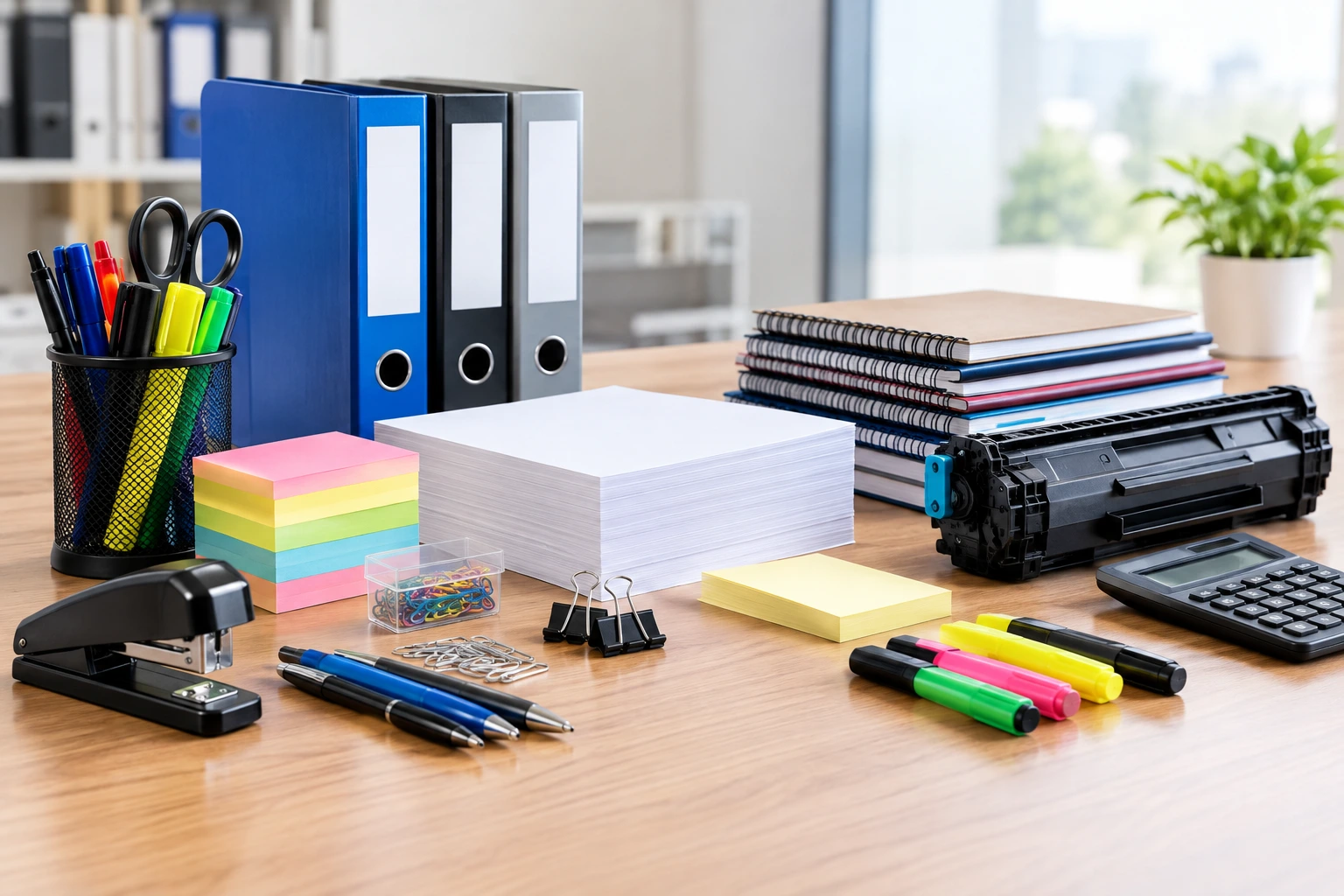
Managing office stationery may seem like a small task, but poor planning can lead to unnecessary spending, excess stock and shortages of essential supplies. Frequent last-minute purchases can also make it harder to track expenses and manage the monthly budget.
A simple monthly stationery purchasing system can help businesses keep the right items in stock while controlling costs. Tracking usage, setting a budget and working with reliable office stationery suppliers in Jubail, Saudi Arabia can make the purchasing process more organised and efficient.
Why Use a Monthly Office Stationery Purchasing System?
A monthly stationery purchasing system helps businesses keep their supplies organised and control their regular office expenses. It also makes it easier to plan orders based on actual usage rather than making last-minute purchases.
- Prevents stationery shortages and rushed purchases.
- Helps keep monthly spending within budget.
- Reduces duplicate and unnecessary orders.
- Makes inventory easier to track.
- Keeps invoices and purchase records organised.
- Helps businesses negotiate better prices through planned orders.
1. Audit Your Current Stationery Usage
Before placing your monthly stationery order, take a quick look at what your business actually uses. This helps you avoid unnecessary purchases and gives you a better idea of which items need regular replenishment.
List Your Regularly Used Stationery
Start by listing the stationery items your office uses regularly, such as:
- Paper and printing supplies
- Pens and writing materials
- Files and folders
- Desk accessories
- Printer consumables
- Other frequently used office supplies
Check Your Existing Stock
Conduct a physical stock count before ordering new supplies. Identify items that are overstocked, rarely used or duplicated across departments. This can prevent unnecessary purchases and help you use existing stock first.
Track Monthly Consumption
Review previous purchase records to understand how much stationery your business typically uses each month. Identify fast-moving items that need frequent replenishment and slow-moving products that can be ordered in smaller quantities. This information will help you set realistic stock levels and plan future purchases more accurately.
2. Set a Realistic Monthly Stationery Budget
A clear monthly budget helps businesses control stationery expenses and avoid unnecessary spending. Set the budget based on actual purchasing patterns rather than choosing an amount without reviewing previous expenses.
Calculate Your Average Monthly Spending
Review stationery expenses from the previous three to six months to understand your average monthly spending. Look at invoices and purchase records to identify how much the business usually spends. You can also review spending by department if different teams have different stationery requirements.
Divide the Budget by Category
Breaking the budget into categories makes spending easier to monitor. Consider allocating separate amounts for:
- Paper and printing
- Writing and desk supplies
- Files and folders
- Printer and technology consumables
- Other office supplies
Keep a Small Contingency Amount
Leave a small portion of the budget for unexpected requirements, such as new employees, additional projects or sudden increases in stationery usage. This gives your business some flexibility without making the regular budget too restrictive.
3. Create a Standard Office Stationery List
Create a standard list of the stationery items your business regularly needs. Include details such as the preferred brand, size, pack quantity and product type where necessary. This makes it easier to prepare monthly orders and ensures you choose the right products when purchasing from office stationery suppliers in Jubail, Saudi Arabia.
It is also useful to set minimum and maximum stock levels for each frequently used item. The minimum level indicates when it is time to reorder, while the maximum level helps prevent overstocking. Standardising commonly used products can reduce unnecessary variations in brands and sizes, making purchasing and inventory management simpler.
4. Choose Reliable Office Stationery Suppliers in Jubail
Choosing the right supplier is an important part of managing monthly stationery purchases. A reliable supplier should be able to provide commonly needed products consistently while offering suitable pricing and dependable service. Look for suppliers that offer a good product range, competitive prices, quality products, bulk purchasing options and reliable delivery. Clear VAT invoices and responsive customer service are also important for businesses that place regular orders.
What to Look for in a Stationery Supplier
- Wide product range and availability
- Competitive pricing
- Consistent product quality
- Bulk purchasing options
- Reliable delivery
- VAT-compliant invoices
- Responsive customer service
- Ability to manage recurring business orders
Why Local Suppliers Can Benefit Jubail Businesses
Working with local office stationery suppliers in Jubail, Saudi Arabia can make regular purchasing more convenient. Local suppliers may offer easier communication and convenient delivery to offices and industrial areas. Building a long-term relationship with a dependable supplier can also make it easier to manage recurring orders and replenish essential supplies when needed.
5. Create a Simple Monthly Ordering Process
Assign one person, such as an office administrator or procurement staff member, to handle stationery purchases. This person can collect requests, check current stock and prepare the monthly order. Having one person manage the process helps avoid duplicate purchases and keeps stationery requirements organised.
Set a regular time each month to review stock and place orders. Fast-moving items can be reordered when they reach their minimum stock level. Whenever possible, combine routine requirements into one larger order. This can reduce administrative work and delivery costs while also giving you an opportunity to negotiate better prices with your supplier.
6. Track and Review Your Stationery Spending
Regularly tracking stationery expenses helps you understand where your money is going and whether your monthly purchasing system is working effectively. Keep a simple record of every purchase, including the item name, quantity, price, supplier, purchase date and invoice details. This makes it easier to review expenses and identify changes in purchasing patterns.
Record Every Purchase
Maintain updated purchase records for all stationery orders. You can use a spreadsheet or simple inventory system to track:
- Item and quantity
- Price and supplier
- Purchase date
- Invoice details
Compare Spending With Your Budget
Compare your actual monthly spending with the stationery budget. If expenses are higher than expected, identify the reason and check whether the increase is temporary or recurring.
Adjust Your Stock Levels
Review stock levels based on actual usage. Increase quantities for fast-moving items and reduce purchases of slow-moving products. Update your standard stationery list whenever business needs or employee requirements change.
7. Common Mistakes to Avoid When Buying Office Stationery
Poor stationery purchasing practices can lead to unnecessary expenses, excess stock and shortages of essential items. Avoiding a few common mistakes can make monthly purchasing more organised and help your business use its stationery budget more effectively.
- Ordering only when supplies run out can lead to shortages and rushed purchases.
- Buying without checking existing stock may result in unnecessary or duplicate purchases.
- Allowing multiple employees to place separate orders can make spending and inventory harder to track.
- Using too many suppliers unnecessarily can make communication, pricing and order management more complicated.
- Over-ordering slow-moving products can tie up money and create excess stock.
- Failing to standardise commonly used products can make purchasing less consistent and harder to manage.
- Ignoring supplier performance can lead to repeated issues with quality, pricing or delivery.
- Not reviewing stationery spending regularly can make it difficult to identify overspending or changing business needs.
Monthly Office Stationery Purchasing Checklist
Use this simple checklist each month to keep your stationery purchases organised and avoid unnecessary spending. Businesses working with office stationery suppliers in Jubail, Saudi Arabia can use it to make sure each order is properly planned and recorded.
- Check the current stationery stock.
- Review the previous month’s stationery usage.
- Identify items that are below minimum stock levels.
- Check the available monthly stationery budget.
- Confirm the quantities required.
- Compare supplier pricing when necessary.
- Place the consolidated stationery order.
- Verify the delivered items and quantities.
- File VAT invoices and delivery documents.
- Update inventory and purchase records.
Make Monthly Stationery Purchasing More Efficient
Managing monthly stationery purchases becomes easier when businesses regularly review usage, set a clear budget and maintain appropriate stock levels. A standardised ordering process also helps reduce unnecessary purchases, avoid shortages and keep spending under control.
Choosing dependable office stationery suppliers in Jubail, Saudi Arabia can further simplify regular purchasing and ensure essential supplies are available when needed. Businesses can work with Newlight Trading EST for their office stationery requirements and make monthly purchasing more organised, convenient and efficient.